
Key points
- A cash advance is borrowing cash, or something treated like cash, on a credit card.
- It usually costs a fee up front, plus a higher interest rate than purchases.
- Interest normally starts the day you take the money, with no interest-free window.
- A small amount held for a few months can cost far more than people expect.
What counts as a cash advance
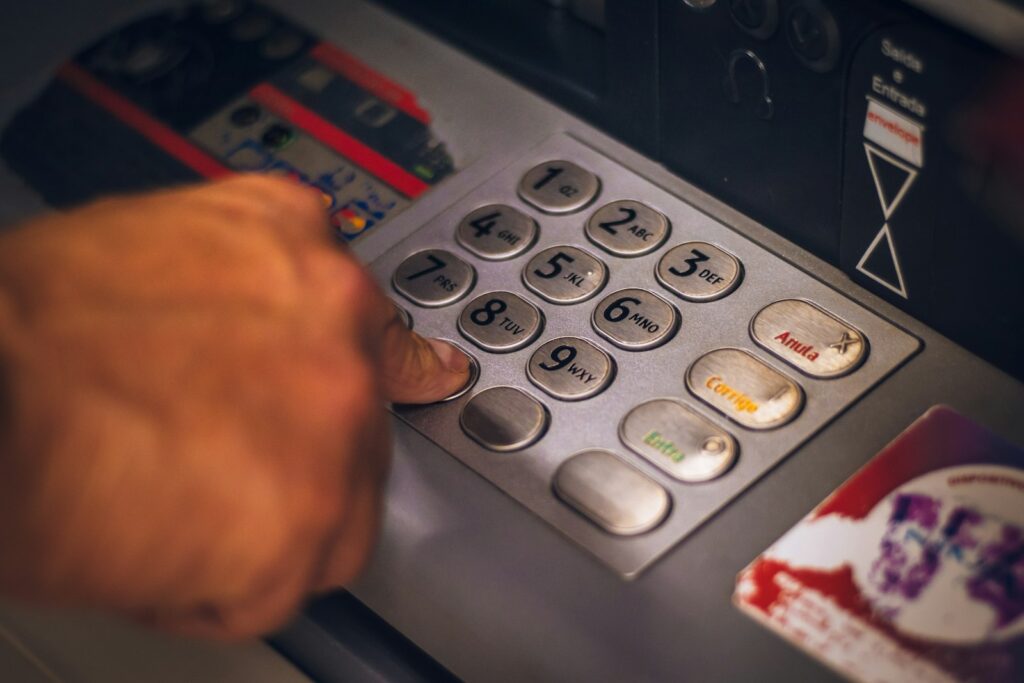
The obvious one is pulling money out of an ATM with a credit card. But card providers often treat plenty of other transactions the same way.
Moving money from a card into a bank account often counts. So does buying foreign currency or traveller’s cheques. Gambling transactions, including some online betting, often do too. In some cases, so do gift cards, prepaid cards, and certain money transfer or payment services.
What counts varies between card providers and countries. Your card’s terms and conditions list the transaction types it treats as cash. Read them.
The three costs stacked together
1. An up-front fee
Most cards charge a cash advance fee every single time. It’s often a percentage of the amount, with a minimum dollar figure, and it usually goes straight onto your balance.
2. A higher interest rate
Many cards charge a separate, higher rate for cash than for purchases. It sits on the same statement as everything else, so it’s easy to miss.
3. No interest-free window
With purchases, paying the full statement balance by the due date often means you pay no interest at all (interest-free periods explains how). Cash advances usually don’t get that window. Interest starts the day the money leaves.
And there can be more. An ATM operator may add its own fee, and overseas withdrawals can bring a foreign transaction fee on top.
A cash advance cost: a worked example
The assumptions:
- Cash advance: $500
- Cash advance fee: 5% ($25), added to the balance
- Cash interest rate: 28% a year (monthly rate = 28% ÷ 12)
- Interest charged monthly on the full balance, including the fee
- No payments made during the period
| After | Interest that month | Balance owed |
|---|---|---|
| Day one | $0.00 | $525.00 |
| 1 month | $12.25 | $537.25 |
| 2 months | $12.54 | $549.79 |
| 3 months | $12.83 | $562.62 |
Clear it after one month and borrowing $500 has cost you $37.25. Leave it three months and it’s $62.62.
Now put that next to a $500 purchase on a card at 22%, with the full statement balance paid by the due date. Interest: $0.00. Same card. Same amount. Very different result.
The maths works the same in any currency. Your card’s fee and rates may be higher or lower than this example.
Where your payments go
When a card carries more than one balance, say purchases and cash, your payment has to be split between them. How that happens depends on your country and provider. Sometimes extra payments go to the highest-rate balance first. Sometimes they don’t.
If your payment gets applied to the cheaper purchase balance first, the cash advance can sit there collecting the higher rate for longer. Your card’s terms spell out how it works for you.
Why people use them anyway
Cash advances usually happen when money’s tight and something needs paying right now. A bill that only takes cash. An emergency away from home. A gap before payday.
That’s understandable. But knowing the cost lets you weigh it against your other choices. If you’ve got money set aside in an emergency fund, that’s one. If the biller takes cards, paying them by card directly instead of withdrawing cash is another. For larger amounts, some people look at a low-rate personal loan, which comes with its own costs and trade-offs.
None of these is free of cost or risk. Which makes sense for you depends on how much you need, how fast, and how soon you can pay it back.
If you’re using cash advances to cover everyday bills, or to make repayments on other debts, take that seriously. It’s a sign your budget is under real pressure. Free debt help is confidential and can help you look at the whole picture.
Spotting them on your statement
Cash advances are often listed separately, with their own rate and their own interest line. See a “cash” balance you didn’t expect? Find out which transactions caused it. It’s easy to trigger one without realising, especially with gambling or transfers.
Common questions
Is there an interest-free period on a cash advance?
Usually not. Interest normally starts the day you take the money, even if you pay the full statement balance by the due date.
How much does a cash advance cost?
That depends on your card’s fee and cash rate. In the example above, $500 cost $37.25 if cleared after one month and $62.62 after three months.
Is buying gift cards with a credit card a cash advance?
Sometimes. Card providers often treat gift cards, prepaid cards, gambling and money transfers like cash. Your card’s terms list which transactions count.
Try it
Put the cash advance balance and its rate into the credit card payoff calculator to see how long it takes to clear and what it costs you in total.
General information only, not financial advice. Your situation is your own.
Credit card payoff calculator
Read next
 Cards, loans and creditLate fees and penalty interest ratesHow a credit card late fee works, when a penalty interest rate can kick in, and a worked example of what a higher rate adds to the cost of a balance.Building5 min read
 Cards, loans and creditPayday and other high-cost loans: the risksPayday loans and other short-term loans are quick to get but can be very expensive. How the fees work and how a small loan can keep growing.Building5 min read
 Cards, loans and creditStudent loans: the basics that apply everywhereStudent loans work differently from country to country, but a few ideas apply almost everywhere: interest, grace periods and how repayment is set.Building5 min read